Sunday, February 24, 2013

Sweet As...

In New Zealand, if you like something a lot or think it's really cool, you'd call it, "sweet as."  Not "sweet as something", just"sweet as." 

Our tramping trip to Milford Sound ended with - a cruise through the massive Fiordland National Park and it was "Sweet As." The crystal clear water in the park is so deep that cruise ships can’t reach the bottom to anchor. I lost count of the massive waterfalls tumbling into the sea. Our captain tucked the boat alongside one- delighting and drenching those on the top deck! Fur seals struck a pose on rocky outcroppings along the snow-capped mountains as kayak paddlers broke through the mirror-flat waters. Unfortunately, photos just don’t do the fiords justice so you’ll just have to plan your own trip to see them.

Back in Queenstown, we grabbed one last walk along the water, said goodbye to our mountain views and toasted our accomplishment in a pub with a group of fellow walkers.

From this trip I took away the great respect and stewardship the Kiwis have for their land. I didn’t see one piece of trash on the entire trip. An active and low impact lifestyle is the norm for most and they are more than pleased to share their lovely country. So grab your backpack and jumper, put on your sunnies and head on down for a flat white- Sweet As!

Friday, February 22, 2013

I'd Rather be in a Staff Meeting...

On the third day of our Milford Track hiking adventure, as we continued our ascent to the Mackinnon Pass, I heard something come out of my husband’s mouth that I never thought I’d hear. As we slowly slogged up the trail he muttered, “In six years of retirement, I never thought I’d say this but I’d rather be in a staff meeting!”

I can only hope his momentary lapse was due to the arduous climb through the fog to the highest point of our hike, named for the fearless Quintin Mackinnon who pioneered the track in 1888. I hoped that the descent, albeit a rocky one, would raise his sagging spirit and ease his tired legs.

The Milford Track, often called "the finest walk in the world", is the capstone to our three-week adventure. Most recently, we’ve made our way down New Zealand’s mountainous South Island, enjoying breathtaking vistas, snow-capped mountains and the easy-going vibe that is synonymous with the Kiwi lifestyle.

After departing from Franz Josef glaciers we dropped off our car in Queenstown. Jeff was glad to hand over the car keys after days of mountain switchbacks and more than a few white-knuckle moments on the road.

Queenstown was originally settled in the 1860s during one of New Zealand’s gold rush periods.  It now serves as their center for extreme sports. A walk down the main drag affords opportunities to partake of bungee jumping, sky diving, paragliding and rafting. In the winter, it serves as a hub for skiers.  Ringed by the Remarkable mountain range and sitting on glacial Lake Wakatipu, the town of 12,000 swells to over 30,000 at peak periods. Proud locals will share that the lake is 99.999% pure so you can go ahead and fill your water bottle right from the lake! Jeff was itchy to put a line in the water to snag one of the huge trout calling the town pier their home.  A 15-minute transfer left us at the Shotover River where we boarded a speedboat for a rock-hugging, high-speed ride own the winding river. We pulled 360s within inches of the rocky canyon walls.

At our Saturday briefing, we met our fellow hikers, were issued our gear and received final instructions for the upcoming hike. This is my first hiking trip carrying more than a day pack- we carry all our clothes, drink, lunch and other needs on our back. We spent the evening paring down and dividing up essential items (OK, we spent the evening tasting New Zealand wine, but we talked about packing while we drank).

The drive to the trailhead was spectacular- passing sheep and cattle stations and meandering streams. After a quick ferry ride and hike, we arrived at Glade House, our first lodge for the trip. Remember, all the materials used to build these 50-person lodges had to be carried in by boat, helicopter or on foot. Several succumbed to fire or avalanche and required rebuilding.  The effort makes the structures with their picture-perfect views even more impressive. We settled in to enjoy a hearty supper with our fellow trekkers- mainly from Australia, Japan and the US.

Each morning we were awakened by Genny. Genny is not a saucy New Zealand gal. Since power goes off each evening at 10pm when the “Genny-rator” is turned off, for an eye-opening wake up call we were instructed to leave our lights on and enjoy a bright wake up when the “Genny-rator” came on each morning.

The first day hiking is always a bit shaky. You find yourself questioning how much food and water to bring, what pace to keep and how much clothing to wear. Nights include reassessing your pack and tending to sore muscles and blisters (OK, again they also include wine and stupendous views). Day Two was when Jeff informed me (as he did in Kili) that I should include my next husband on any future hikes. His painful gate resembled that of Kramer in the Seinfeld episode where he wore the really tight jeans and walked like Frankenstein.

To get a sense of the often rocky inclines, one 9-mile day took eight hours to complete. This was followed by a 13.5 mile day- all carrying a 20lb. pack. It has truly given me a new appreciation for the joint pain and increased effort required to carry even small amounts of additional weight. Can you spell Weight Watchers?

Our final day was spent hiking on rain forest trails lined with giant ferns and waterfalls. The trek was arduous but rewarding when we gathered with our fellow hikers for the ferry to our final lodge.

You may wonder (as Jeff often pointed out) why a person would put themselves through such effort- especially on vacation! The challenge and ultimate achievement of the goal is compelling. Sharing the experience with new-found friends is equally memorable. The encounters with exquisite scenery and wildlife are something you can’t see from a tour bus.  And in the end, it’s better than ANY staff meeting!

Thursday, February 14, 2013

Ice, Ice Baby

The weather fairies were with us again for our morning helicopter ride to Franz Josef glacier.  Due to fog and visibility, it was touch-and-go if we would fly but we were the only group to make it up to the glacier for the day. Once the copter landed we strapped on crampons to grip the ice. The glacial terrain is constantly on the move so the crew carries axes to cut stairs to create paths to various ice caves. It makes for a once-in-a-lifetime adventure.

Skipper vs. Barbie: the Battle of the North Island

When I was a little girl I had a Skipper doll. Skipper was Barbie’s younger scrappier cousin.  She wasn’t nearly as glamorous as Barbie but she what you’d call “spunky” and was the kind of doll that could probably throw a good softball pitch.  I SO wanted to love Skipper but Barbie was the one with the cool beach house and metrosexual boyfriend. How could you resist her charms?

That was how I feel about Wellington. It is the Skipper of New Zealand’s north island, living in the shadow of glamorous and well-heeled Auckland. Both have beautiful waterfronts dotted with sailboats and breezy restaurants. While Wellington lacks the population and size of Auckland, as the country’s capital it has a substantial government center. Its local universities give it a youthful quality with areas full of ethnic restaurants and pubs for watching “footie” games. While Auckland’s movers and shakers enjoy cocktails at trendy locavore restaurants, Wellington’s after-work crowd gathers on lawns at local rowing clubs along the quay. Our favorite time in Wellington was spent walking the miles of nature paths in the city’s Botanical Gardens. Their outdoor café in the rose garden was a perfect spot for brunch and a glass of crisp wine.

To get to the south island, the most practical way is via ferry. The boat is huge- full of people on foot, in cars and in caravans (the Kiwi equivalent of RVs) as well as large trucks hauling goods between islands. The four-hour journey was pleasant- they even have a kids’ play area, a casino and show two movies on the crossing. It took a good hour to load us all onto the vessel and they strongly reminded travelers to note where their vehicles were parked- much like a Jersey shopping mall parking structure. I can only imagine the honking if we were to lose our car among the many decks and bring disembarkment at a standstill.

Our first stop on the south island was a special one.  We’ve settled in to a lovely cottage tucked into the countryside in the south island Marlborough wine country. Run by a lovely couple, we’re staying in a sheep-shearers cottage on a small property complete with sheep, deer and chickens (who are kind enough to supply eggs for our morning breakfast). We can barely bring ourselves to leave the idyllic property (but I did get a special run and bike ride through the vineyards!) The owner, Paul, has taught me how to make a flat white coffee-a complex procedure that includes warming cups to the optimum temperature before filling.  He would cringe if he knew I had CoffeeMate in my suitcase. Paul has a ’55 red Morris convertible- a cross between a Mini and Alfa Romeo. We were so taken with the little sportster that he gave it a washing and chauffeured us to a special dinner at the Hertzog vineyard. What a memorable evening!

After a side trip to the famous west coast Pancake Rocks with their powerful blowholes, we’re now settled in to Franz Josef, getting ready for tomorrow morning’s helicopter ride to our glacier walk. 

Thursday, February 7, 2013

Our Date with Mt. Doom

OK, not really Mt. Doom. Ngaurahoe is the mountain featured as Mt. Doom in Lord of the Rings. We are heading off to hike its next door neighbor, Mt. Tongariro. New Zealand takes its LOTR stories so seriously- we think there should be a drinking game involving Jagermeister every time someone says “hobbit.”
The Tongariro Alpine Crossing is arguably one of the finest day hikes in the world. We are using it as a dry run for our 4-day Milford Track hike at the end of our trip. Due to high winds, blistering cold and volcanic ash, the trail has been partially closed the last few days.  Luckily (or not so luckily) the trail is open for our day of hiking. 
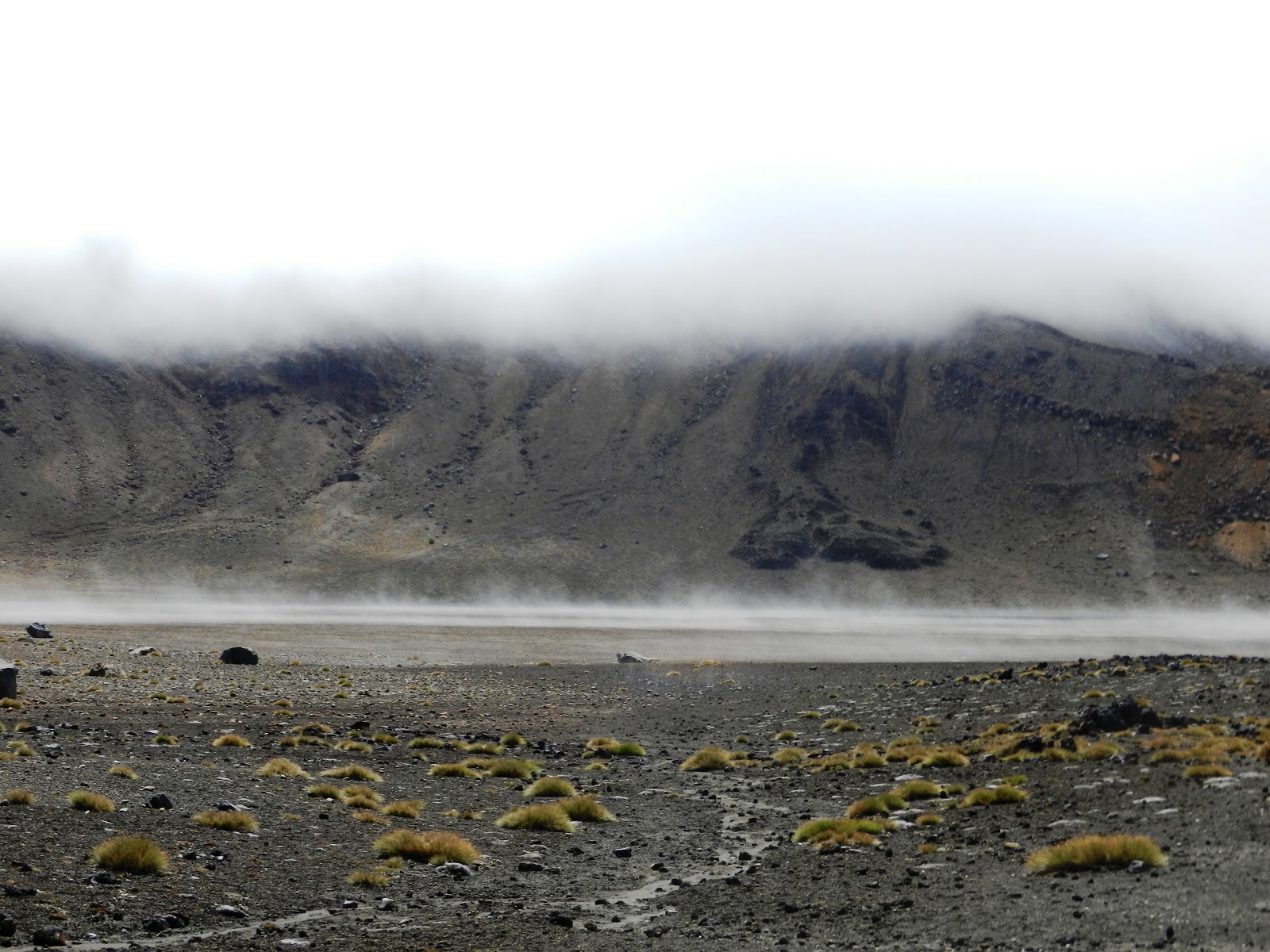
We literally have on every item of hiking gear and clothing we brought.  Loaner gloves allowed Jeff to leave his hand-socks at home. Wind gusts of 35mph cut through our clothes but luckily the sun peered out to warm things up a bit.  With the trail closing, we did an out-and-back hike for 6+ hours instead of the full 8-9 hour adventure. The topography was striking.  Much of it appeared like a rocky Mars- dotted with small drought-tolerant succulents and rocky terrain. Later, streams and lichen made for a more verdant landscape. One crater area was covered with rolling clouds at our feet as we walked across the flatlands.
Probably one of the best views was actually from the huge windows at the Schnapps Bar at the foot of the mountain. Well, at least it was warmer! And they had Jagermeister… just in case!

Kia Ora, My Little Kiwi!

Kia ora, Welcome to New Zealand. After a long journey we are safe and sound in middle earth as Hobbit aficionados know New Zealand. The country is full of national parks, volcanos, wineries and sheep (due to sheep “emissions” the country can’t meet its limits of the Kyoto Accord). One thing it’s not full of is people.  Only 4.2 million live in the entire country- three quarters live in the North Island. OF these, I believe two thirds are cute guys with even cuter accents!


About 12 percent of the population is Maori, the local indigenous people. According to Maori legend, the demigod Maui sailed from Hawaii in his canoe and caught a huge fish. The fish is supposedly the north island while his canoe is the south island. This week the country celebrated Waitangi Day, marking the date in 1840 when the treaty was signed between the British and the Maori. I must admit I’m having trouble with the Maori words- particularly the names of small towns. Most start with “W” or “T” and are tongue-twisters like Whakatane, Waitara and Waipukurau. To further complicate things, the “wh” is pronounced like “f”, “r’s” are rolled like “d’s” and “a’s” are like “ah.” You should hear me calling out directions from the map.

We settled in quickly into Auckland, the nation’s largest city. The “City of Sails” wraps nicely along the water and boasts of 70,000 boats in its harbor. The quay is dotted with trendy bars and outdoor cafes. Auckland is a livable city with their own version of Central Park (the Domain) and Ponsonby, a leafy neighborhood of wooden Victorian homes and cafes. Jeff was elated to find the Superbowl available at a nearby 115 year-old tavern. I guess Beyonce goes beyond all borders.

We’ve become addicted to flat whites- the ubiquitous creamy latte-like coffees offered in every café. I do love my froth but these are beyond description. I’m also feeding my sweet tooth with hokey-pokey, a yummy butter brittle ice cream, and pavlova, the feather-light national dessert much like a gooey merengue. Thankfully, our itinerary is jam packed with activities to work off these treats.

After Auckland we ventured to Waitomo for blackwater rafting in the area’s famous glow worm caves.  This is one of those activities that you can do in other countries but would never be allowed in the litigious US. After suiting up in heavy wet suits and selecting a size-appropriate inner tube (if you sit in it and it sticks to your bum, that’s the one!) we hiked down to Ruakuri Cave. After slithering under low hanging stalactites (remember, stalagmites have a “g” and come from the ground while stalactites have a “c” like ceiling!) we cascaded down freezing underwater waterfalls. Once we dimmed our headlights, we were amazed by the light show of millions of glow worms dotting the ceiling. What a sight! Unfortunately they don’t allow cameras as they want you focused on not drowning or causing bodily injury, so I’ve had to attach a photo from the tour company. 

Next up… hiking the Tongariro Crossing, supposedly one of the finest one-day hikes in the world!  I had better juice up on flat whites!

Wednesday, September 12, 2012

The Hills Are Alive


We’re just wrapping up the biking portion of our trip and I can’t recommend it enough. Our six days of riding kicked off in the Czech Republic, meandered through Germany along the Danube and wrapped up in the Austrian countryside. Since the terrain for the most part is fairly flat, rides have been pleasant. Most have been within constant view of a river and castle of some kind.  People who are attracted to a trip like this are easygoing, active and low maintenance- all good things in travel partners.

A few things have been constant throughout our adventure:

·     Bavaria is clean. We saw a total of two pieces of trash along our 100 miles of riding.  I’m not sure if they just choose to be green and not litter or are meticulous in cleaning. I’d bet on the former based on the solar panels we saw on most homes and farms.

·         They sure do know how to grow some flowers.  Window boxes in the quaint villages we visited were overflowing with colorful vines and flowers. We’ve stayed in a series of family-run inns- each one more charming than the next!

·         They sure like castles and cathedrals. No matter how small the town, they’ll surely have a town square or two dominating the village. The small village of Passau, Germany has the second largest organ in the world.  In the Czech village of Cesky Krumlov, the grand Rosemberg chateau was a huge presence guarding over the city. The Benedictine Abbey in lovely Melk, Austria held more gold than Fort Knox! 

·         They can brew some beer! From Czech to Austria, most meals included a local brew or two- often in a tiny Bavarian tavern.They also make a mean wine here in Austria with vineyards lining our bike paths.  

 After tonight’s goodbye dinner, we’ll bid adieu to our fellow cyclers and head off for Vienna (in search of the boys choir & sausages. Get it?) I’m hoping this will be the first of many bike trips in our future.

Monday, September 10, 2012

Terezin: Never Again

Sometimes when you travel it is important that you do things you don’t necessarily want to do.  Terezin is one of those things.  You see, Terezin is a concentration camp.
Terezin Crematorium

Originally built in the 1700's as a fortress to keep out the Prussians, the compound was later repurposed by the Nazis to keep the Jews in.Terezin is both a town and a camp. The Nazis moved out the original 7,000 town residents and replaced them with 60,000 Jews into what they termed a “resettlement area.” To keep the settlers content, when they took neighbors away to the fortress to be transported to extermination camps, the overseers told them they were going off to visit other family members and shared “stories” of other friends that were waiting for them. This town was an important tool for the Nazis in early days, serving as their model Jewish town and was used for propaganda purposes.  They even produced a video, The Fuhrer Gives a City to the Jews, laden with happy settlers enjoying soccer, sewing and concerts. 

How the viewers could miss the haunting stares of the residents is beyond me. Similarly, the nearby camp was prepared for an imminent Red Cross inspection with a carefully planned tour, new paint, and improved bathroom facilities (the sinks, installed just for show, didn’t even have working plumbing.) Camp residents were forced to build railroad tracks ostensibly for supplies, but really used to move prisoners on to Auschwitz without attracting the attention of the townsfolk. Sadly, the site passed the brief Red Cross inspection.

Although over 300 Jews were hanged or shot at the camp, the dire conditions in both the overcrowded town and camp were the real enemy. Disease was rampant, sanitation lacking, and medical care unavailable. Of the 155,000 that passed through the facilities, over 35,000 succumbed from the conditions. Fewer than 100 of the 15,000 children in the camp survived. Others were shipped east to the extermination camps for the Fuhrer’s final solution.

For me, a particularly difficult sight to see was the crematorium and cemetery. In the earliest days, at one end of the cemetery, the dead were buried side-by-side with small gravestones. As time progressed, each site held 20 or more remains with a small stone marker. Finally, one end of the field remains bare as they gave up marking remains buried en masse in huge pits. The crematorium still holds the scent of the oil used to run the ovens. Sadly they had turned the process into quite a production line and ran around the clock to meet the burgeoning needs of the camp.

Throughout our visit I couldn’t help but think of the quote by Martin Niemoeller featured at the Holocaust Museum in Washington:
“First they came for the Communists but I was not a Communist so I did not speak out. Then they came for the Socialists and the Trade Unionists but I was not one of them, so I did not speak out. Then they came for the Jews but I was not Jewish so I did not speak out. And when they came for me, there was no one left to speak out for me.”

Grand- And She Knows It!


I was actually a bit afraid to meet Prague.  Everyone raved about it. “It’s one of my favorite cities,” I’d frequently been told. It was as if it was my duty to fall for this historic Czech capital. What could be so special about this place that made so many folks wax poetic?  What if it didn’t measure up?

Honestly, for the first day, I didn’t know what to think about Prague.  I needed time to let it sink into me.  So many things about it reminded me of Paris- the numerous bridges that cross the river linking the city neighborhoods, its quaint restaurants with colorful window boxes, and its many urban parks serving as quiet oases in the midst of everyday life.  In other ways, it reminded me of Barcelona with its odd mixture of architecture.  Its looming castle and many cathedrals made me think of Romania.  Its youthful vigor brought to mind our recent trip to Croatia.

Finally, after a second evening walking home along the riverfront it washed over me that Prague was just Prague.  It isn’t Paris or Barcelona and frankly, it doesn’t try to be.  It reminds me of a society matron putting on her best finery and jewels to get ready for a ball. There may be a few cracks in her makeup, her corset may be a bit too tight, but she will demand and receive attention from the moment she enters the room. Prague is a proud city with a rich and powerful heritage that for the grace of God was never flattened by the war and upheaval that surrounded it.  Its grandeur is resplendent from the huge castle looking down on the city from a nearby hill (the largest in the Czech Republic) to the Charles Bridge serving as a hub for its many admiring visitors. Her residents take time to enjoy the finer things life offers- a lingering coffee and croissant, an evening organ concert or just strolling the cobblestone streets. Every meal we enjoyed was al fresco- most along the riverside.  A classical guitar concert provided a wonderful evening interlude- especially after a mug of local beer. A favorite moment was a lovely lunch up at Belle Vista, a tiny hillside café overlooking the castle, vineyards and the city down below- again, with a local beer in hand.  Now I “get” Prague.

Sunday, September 9, 2012

Gem of the Adriatic

Imagine all that you love about Italy- the food, the olive oil, the wine, the countryside.  Now throw in azure waters and a younger hip vibe. That’s the Croatian coastline. 

The country boasts of 1000 islands and we are headed off on our chartered yacht, the Vito, to make our mark on just a few of these atolls.  Our gang gathered on the dock in Split for transfer to the Vito in Trogir.  After meeting the crew and enjoying a glass of champagne, we checked out our staterooms, pumped up the ipod, then headed into the small but sophisticated town for a meal of fresh seafood.

It’s a tough schedule aboard ship. It’s not for the faint of heart.  After a hearty breakfast, many decisions must be made- where will we anchor for swimming, what time will lunch start, and the big question for the day- white or red wine.  Croatian wines are excellent.  They are selfish and keep them for themselves so you won’t see it on your grocery shelves.  After lunch and several bottles of cold, fresh white wine, followed by an afternoon swim, the grind begins again as we head into port in the skiff for the evening’s feast.

Each town has its own flavor, whether natural beauty of Brac, Vis, and the Mjlet National Park or the hopping seaside bar scene in Hvar or Korcula, each night was special. Our personal favorite was Korcula due to its rich history, fortified city, and bevy of sea-side restaurants.

But the trip was capped off with the gem of the Adriatic- Dubrovnik.  Until the conflict with Serbia, this beautiful city had remained untouched through centuries of Roman, Ottoman and Venetian conquerors. You can see its battle scars- pock marks from bullets and newly-tiled roofs replacing those ruined by mortar, but these small imperfections don’t mar the beauty of this charming city- only serving to make her appear a bit more “worldly.” 

This walled city is best explored at the edges of the day- early morning walks on the city walls before the cruise ships descend on the town and late afternoon at Bar Buza.  You’ll have to hunt for a small opening in the city walls to find this tiny bar.  Tucked neatly into the cliffs overhanging the sea, most evenings started here as we watched kayaks and fishing boats make their way home for the evening and ended with a promenade down the Stradum with a gelato.  A special dinner on the cliffs above the city was a great way to end the day and a highly recommended spot is D’Vino wine bar (a girl needs to learn about the local brew, doesn’t she?)

While chartering a boat and crew is a special treat, Croatia has a great ferry system that will get quickly get you from island to island and you can round up a cozy apartment for a short stay before heading off to your next island adventure.  Now, you don’t have much of an excuse not to visit, do you? 

Sunday, July 15, 2012

Now This is Retirement, Diocletian!


With over 3,600 miles of seafront and more than 1,000 islands, Croatia feels more like the Riviera than Eastern Europe.  Much of its ambiance comes from its history- I’ve lost count of how many countries and empires ruled- or attempted to rule- this small gem of a country. It’s northern Istria peninsula, tucked in just east of Venice and Slovenia, feels more like Italy.  As you head south along the Dalmatian coast, the influence of Germany and others is felt in architecture and cuisine. But wherever you go, Croatians are a friendly sort, eager to share their rich history while enjoying life along the Adriatic sea.


Our initial stop before boarding our yacht was Split with its impressive Roman ruins. The centerpiece of the old town is the palace of the Roman emperor Diocletian (245 – 313).  His retirement home of sorts, the palace was both a fortified city and a luxurious villa. No grid system is at work in here- it is an amazing labyrinth of alleys and lanes now featuring boutiques and galleries side-by-side with Roman ruins.  The palace was eventually abandoned so the locals, fleeing Slavic invaders, moved in and the town sprouted up among the ruins.  When the Venetians took power in the 15th century, they added new fortification and architectural flourish. 


Like much of Europe, the favorite local pastime is strolling the seaside pedestrian boulevard, the Riva (the Croatian equivalent of Barcelona’s Ramblas!) We stayed in a local Sobe, a small equivalent of our own B&Bs.)  We could literally open a window and reach out and touch the ruins of Jupiter’s Temple. A Croatian choral group practiced nightly for an upcoming festival- their voices bouncing among the ruins.

Next stop, meeting the Vito and its crew for our sailing adventure.

Sunday, September 4, 2011

Au Revoir, Mont Blanc

After six tough days of hiking, I’ve folded up my hiking poles, packed away a pile of stinking Under Armour clothing and headed to Geneva to celebrate the completion of our Mont Blanc adventure.

Hiking here in Europe was an entirely different experience than hiking to Machu Picchu in Peru.  There, we worried with high altitude and drinking the water but were rewarded with a lost Incan city. Here, we encountered lots of daily mileage and rocky terrain but were rewarded with alpine villages and fine wine as we winded up each day.

The Europeans have an interesting take on hiking. They think nothing of cranking out a dozen miles on the trails on a random sunny Saturday. They will stay in spartan accommodations with shared bathrooms and lumpy mattresses but insist on chocolate croissants and cappuccino at the trailside refuges encountered high on hiking trails. 

During our adventure, we traveled counter-clockwise around majestic Mont Blanc, beginning and ending the journey is picturesque Chamonix, France. Each day was packed with miles of rocky terrain and challenging inclines and descents, but we were greeted to spectacular vistas laden with glaciers, alpine lakes and grassy knolls for mid-day picnics. We visited tiny hamlets bursting with flower boxes and alpine inns. We traveled through France, into the Italian countryside and through Switzerland.  We visited local cheese makers and enjoyed their wares for lunch each day.  We learned of local history, celebrations and customs from our knowledgeable guides.  Local cuisines and wines surely packed on a few kilos. It was challenging each day, but we were more than rewarded for our efforts.  Au revoir, Mont Blanc!

Queen of Queens: Mad Cow at its Best!

I wouldn’t have believed it without a Google search, but welcome to the land of Swiss Fighting Cows!

As we trek across the European countryside, we’ve encountered all shapes and sizes of goats, sheep, marmot (I thought it was just a clothing company!) and cow.  Friends had prepared me for the enchanting symphony of cowbells I’d encounter on our trip.  Imagine hearing a cacophony of ringing bells lilting across the countryside as we go about our journey.

For generations, farmers have placed large (and often heavy and ornate) cowbells around the neck of their milk cows to allow them to quickly find their grazing livestock and bring them in for twice-a-day milking.  The bells sound loudly across the countryside for miles as the animals enjoy grazing in the hilltops.  All that’s missing is Julie Andrews singing “The Hills Are Alive…”

Apparently, the cows like getting milked and line up quickly at the portable milking station and storage tank taken out to the grazing area for the daily ministrations. The cows enjoy the tasty grass until winter approaches and the annual parades and ceremonies are held to welcome them home to lower climes and hay for the winter. I guess this is where the saying about the cows coming home started.

Our guide alerted us that we may see some of the famous Swiss Fighting Cows.  Our group of skeptical and jaded Americans accused her of trying to pull one over on the gullible tourists so we shared our own tales of cow tipping and snipe hunting.  That was, until we got back to civilization and the internet to confirm this exciting competion!

Cow fighting is a traditional Swiss event drawing up to 50,000 spectators a year.  Each year, the canton of Valais and the town of Marigny host a series of cow fights known as combats de reines (“queen fights”). Local district winners vie for the coveted title of La Reine des Reines (“the queen of queens”)  There is no swimsuit competition or scholarship awarded but the value of the winners greatly increases.

These female Herens breed of cows typically get into scuffles in the fields as they assert their dominance of the herd.  Each of these head-to-head butting clashes can go on as long as 40 minutes and end when one contestant either refuses to engage or is pushed from the ring. No worries- horns are buffed down to minimize possible bovine injury.

Spaniards, keep your bullfighting.  Bring on the Swiss fighting cows!

Hard Core vs. Soft Core

I’ve always thought the most difficult people were those who think they are low maintenance but are really high maintenance (of course, I consider myself low maintenance so who am I to judge?) Similarly, as I begin my Mont Blanc hiking excursion, I’m feeling like a bit of a hard core adventurer as I start this 60+ mile trek across the French, Italian and Swiss Alps, rounding Europe’s most famous and celebrated peak. That was, until I reached Chamonix, the quaint French mountain village hosting the Ultra-Train de Mont Blanc.

Frankly, I’d never heard of the UTMB.  These men and women are nuts and are definitely hard core! This annual mountain ultramarathon covering approximately 166km of wicked mountain terrainand elevation gain, takes place annually, beginning and ending in Chamonix.  Some believe it is the most difficult footrace in Europe. These 5000+ athletes don’t have a guide, a bed or a support driver. They run armed with hiking poles, compression socks and headlamps to assist as they trek throughout the night.  Rain, cold and rugged terrain are to be expected.  While the speediest will cross the finish line in slightly more than 20 hours, most take up to 45 hours to complete the course and this year 1100 were forced to drop out along the way.  My most memorable moment was watching four runners hoisting a makeshift sled carrying a disabled little red-headed girl over the finish line.  While no prize money is awarded to the winners, this team and their accomplishment was priceless.

Our group of six took the decidedly more soft core approach.  We head out on Monday with our lead guide, Flo, a 40-something lithe bundle of muscle, and our driver/ assistant guide, Laurent, a lean Frenchman with unbridled energy and enthusiasm.  Our group, all experienced hikers, are ready with our Camelback bladders in backpacks, rain gear on ready alert, Voltaren on our achy knees and stories to keep each other entertained as we conquer the trails of Mont Blanc.

Wish us soft core luck!

Tuesday, July 26, 2011

Hail? REALLY?

We packed up early for our adventure to Lake Hope.  Two-way radios- check. High energy snack foods- check.  Rain gear and hiking poles- check.  Now, if we could just find Lake Hope.  Armed with three (yes, three) hiking trail references, we went off in search of what was billed as a hike to lovely Lake Hope, a high-altitude alpine lake nestled in the mountains south of Telluride.  Unfortunately, every guide provided different directions to finding the elusive trailhead.  We circled lakes, ended at posted “Private Property” signs, and finally mounted a drive up a rocky dirt trail up a mountainside (reminiscent of Costa Rica) to start our hike.  Surely, we’d need all our gear as we’d never encounter homo sapiens during the day- only wildlife and wildflowers were on our agenda.

 
After miles up the trail- Eureka- we arrived, only to find a dozen other cars already parked- their drivers already enjoying our private hike. We’ve determined Telluride is not the place to attempt an illicit affair. We keep running into the same local hikers (and their big dogs, of course!) on different trails each day. So much for quiet moments!
 
But the trip was well worth it.  Long stretches of switchbacks through the forest trail dotted with magenta and yellow wildflowers helped ease the pain of the 2000 foot ascent.  When we finally arrived at the lake, it was well worth the effort.  At close to 12,000 feet, ice flows still floated on the lake surface and snow crept across the mountainsides ringing the lake.  We began to enjoy our snacks when a hailstorm began.  Actually, hail is better than rain since it quickly bounces off your head!  Unfortunately, hail brought its cousins thunder and rain to the party so we hurried down- drenched but happy from the adventure.  Why is the drive down the mountain always so much easier? 

But It's a Dry Heat!

Who decides to leave a 72 degree mountain retreat and head off to hike in the Moab desert in 100 plus degree temperatures?  Apparently, we do! When we found out that the famous Arches and Canyonlands National Parks were only two hours away (western geography was never a strength of mine!) we figured we had best go visit- we may never pass this way again.


After a two hour journey across breathtaking mountain ranges on winding switchback roads, we arrived in Moab, a small Utah town nestled smack-dab in the middle of a handful of national and state parks.

We were not fully prepared for the beauty of the landscape in the area.  Within a few miles of each other, Arches and Canyonlands Parks offer visitors quite different topography.  Arches NP, attracts over a million visitors each year- all eager to view its iconic images like Balanced Rock or Delicate Arch.  Rangers constantly warn visitors to avoid hiking during the hot part of the day and drink copious amounts of water.  On the day we toured, the car touted a temperature of 122 when we returned from our hike.  After running the AC, it quickly dropped down to a balmy 99!


Just down the road at Canyonlands NP, we attended a ranger talk on the geology of the park (fascinating!)  It makes you realize we are miniscule in the scheme of things when you see what thousands of years of wind, rain & gravity can do to form these stunning canyons, waterways and rock formations.

My big question is, if aptly-named Arches NP has amazing arches & rock formations, and Canyonlands NP has canyons deeply cut by the Colorado River, what is going on at nearby Dead Horse Trail State Park?   

Wednesday, July 20, 2011

Stop the Car- NOW!

It takes a lot to create a traffic jam in Telluride.  With only a few thousand residents and only one main road into “downtown”, granted, things could get busy from time to time.  But yesterday, as we headed home after a long day of hiking (did I mention Telluride sits in a canyon at 8700 feet ABOVE sea level so hikes are around 10,000 feet?) cars were at a standstill and pulled over at every available roadside spot.  An overturned tractor-trailer?  An early visitor to this weekend’s Nothing Festival (where revelers wear “nothing”?  No, it was a herd of elk, calmly grazing roadside.  Over 100 of these muscular creatures were lounging in a field, enjoying the endless salad bar of field flowers.  What struck me was that there was only one male in the mass of females and babies.  What must his job be like?  Protector, gatherer, husband, father, provider, chief bottle washer.  Does he EVER sleep?  It’s like REALLY Big Love. 
Today they were back but moving west to new land.  I guess he is travel guide as well .

My Million Dollar Telluride Idea

Telluride is a magical place- the kind of place that offers you its beauty and charm both in winter and summer seasons. While we’ve skied here several times, this was our first foray into summer at Telluride and hopefully, won’t be our last.

Because it is a more newly-developed, everything is aesthetically pleasing and well planned.  That’s not to say that the town isn’t rich in history. Snuggled into a box canyon in the San Juan Mountains, Telluride, once known as the City of Gold, is now a National historic District.  Spanish explorers came in the late 1700s, followed by fur traders and the Ute Indians, and later persevering miners in search of riches. 

Today the town is still sprinkled with historic buildings and charming renovated miner homes. Nestled alongside these quaint structures and dotting the hillside are opulent stone and wood homes for the town’s wealthy residents (Tom Cruise lives in our “hood”.  No Suri sightings yet!)  Top-notch hiking trails and bike paths snake along the downtown creek and up the side of adjacent Bear Creek Mountain.  The hot yoga studio doesn’t publish fees, but asks you to pay what you can (although they suggest you “can” afford to pay between $12 and $20 a session) and the local medical marijuana stores appear to be doing a healthy business. Somehow, it all just “works” to make Telluride a highly “livable” location with a young, laid-back, healthy vibe.

But who rules this quaint town with its main street dotted with flower boxes and local hardware store coexisting side-by-side with  trendy shops and organic restaurants? 
It’s the DOGS! 

I’ve come to realize that there are probably more dogs than humans in this town.  And they appear to be revered by its residents! Telluride would put Paris and New York to shame.  On our first day of hiking, on the trail we noticed that almost everyone we encountered had their dog with them.  Since then, we see them everywhere- on the gondola, reigning over stores, and my favorite, quietly sitting on a bar stool with his human at a trendy mountainside bar last night- watching the sports channel.

Now for my plan- Telluride Rent-a-Dog!  For those visitors or those new-to-the-area who want to immediately fit in and have an instant friend an status symbol (without the worry of crating and airplane travel.)  And these can’t be normal sized dogs.  The bigger, the furrier, the slobberier the better.  Lolling tongues and panting are a plus.  Labs and Goldens will be our specialty . And they will have “immediately friendly” names to match- Rusty, Bo, Buddy, Mac and as a nod to my Southern heritage, Dixie.  These new friends will serve as hiking partners, provide entry into any and all local establishments and be great for picking up members of the opposite sex.  And they will even come with a tennis ball for play! 

Investors, anyone?


Saturday, July 2, 2011

Gotta Up Our Cool Factor!

Do you ever go someplace and finally realize, “I’m no longer cool!” 

Jeff & I have arrived at our final destination, Oxygen Jungle Villas, up in the hills outside the Pacific coast town of Uvita.  After following a series of secret instructions (you only get them after making reservations) we arrived at our villa and were greeted by staff in black tees. They led us to a table with a small pellet in a bowl for each of us.  Our greeter, Dallas (go figure?) informed us this was for freshening up and poured spring water over the pellet which quickly grew to unwrap and become a damp washcloth.  Jeff noted that it was interesting to be greeted with a science project after a dusty drive.  We were then led to our Balinese hut. 


Each unit is guarded by a Buddha (Namaste, Mr. Buddha!)  The hut consists of three walls of glass with all white furnishings inside and on our outside porch daybed.  At least the bathroom and rain shower have opaque glass and we draw curtains for a bit of night time privacy.  The infinity pool is pretty amazing, with lanterns, buddhas, and piped in zen music- all overlooking the cliffs and the Pacific.  I dare you to have high blood pressure here. And you feel like you should talk in low tones. Of course, on the river trail, you pass the yoga hut in the woods before you arrive at the resting platform by the waterfalls.  I feel like a little kid thinking, “Cool!”  Dinner was also interesting.  With only 12 rooms, they can’t offer a full menu so it is “Chef’s Choice” of several tasty courses, all at the discretion of the kitchen.  It was actually really nice to not have to decide what you wanted but to let it unfold and just enjoy. 

One night we ventured off property.  Not an activity for the faint hearted.  This involves a 4-wheel drive, a GPS and mental fortitude.  We left well before dark for dinner at the highly-recommended restaurant, Exotica (I was concerned we were being sent to a Gentlemen's Club instead of a restaurant!) but after going 15k to a bumpy dirt road, we arrived at a tiny (think nine tables) thatched roof building.  We were greeted by the owner, Lucy, a gregarious French-Canadian, who proceeded to serve us the most delightful and sophisticated caribbean-asian fare.  I even broke down to have her homemade chocolate tart with a chili finish.  It amazed us how such a wonderful place can exist and thrive on a hidden road in the middle of nowhere.  Luckily, we made it back up the mountain in the dark and tucked away in our hut for the night.

I think for today, we will imitate my friend the sloth and enjoy our view from the day bed.  Namaste!


Costa Rica: Pura Vida

While Costa Rica may lack in size, it doesn’t lack in natural abundance. This tiny Central American country, about the size of West Virginia, accounts for 0.03% of the earth’s surface but is home to nearly 5% of the planet’s plant and animal species. With over 9,000 plant species, 2000 butterfly species and 876 bird species, it’s hard to avoid natural wonders. The country boasts of 12 microclimates resulting from the combination of mountains, valleys, and coastline. We’ve only filled up our gas tank twice yet have been to two steaming volcanoes, a misty cloud forest, numerous national parks teaming with wildlife, and beaches ringed by rainforests.

The Ticos, as the Costa Ricans call themselves, have an interesting heritage. When the Spanish landed here, unlike other Latin American areas, they didn’t find a large indigenous population with an established empire like the Aztecs or Mayans. The “Rich Coast” set off early in a peaceful direction and has headed that way ever since. While political upheaval and civil war have affected its nearby neighbors, Costa Rica is a stable democratic republic (with a female president) that is famous for lacking an army. Its agricultural exports- coffee, bananas and pineapple are spectacular, as is its major cash crop, eco-tourism. It now walks a fine line- encouraging tourism but controlling its impact on its valuable natural resources. We’ve also found it interesting to have internet everywhere we’ve stayed… you can’t get that in Europe!

What’s been amazing to us has been that our most fascinating animal encounters have not been in parks or reserves but as we casually went about our days. While enjoying coffee on our terrace at Manuel Antonio, a capuchin monkey jumped down off the roof to join us. I’m not sure who had a more terrified look- the monkey or Jeff! Our hotel restaurant had two sloths in the trees that we watched for hours before grabbing drinks. Iguanas would come beg snacks as you sat at the pool. Little need for park tours- most properties have their own trails with amazing viewing opportunities. Nature can be deafening as you awake to the calls of howler monkeys and tropical birds as they start their days. At night, you’re sure every sound from the jungle is a huge tourist-preying mantis.

One of our favorite experiences was a lovely morning horseback ride to Nauyaca Falls near the coast. After a typical Tico breakfast, our feisty horses led us up a rocky trail to a pristine waterfall where the guide strung ropes so that brave participants could climb the falls and jump into the pool below. Eager to get home for food, the horses galloped and trotted most of the way home- riders holding on for dear life. So many times we thought, “The lawyers in the US would have a field day with this!” Needless to say, all arrived safe & sound.
With only two days left, we head off to Uvita, a small coastal town down south. Hasta la vista.

Thursday, January 20, 2011

Meet My New Boyfriend, Laylo

This past year when I visited the Peruvian Amazon, I shared a long-hidden passion of mine… I love sloths! For some reason, these slow-moving, clumsy-looking, furry creatures have always captured my imagination. It started when I saw an Animal Planet special on sloths & watched their mating process. When the female is ready, she begins howling loudly. Males jump into action- or as jumpy as a sloth can get. Watching the males ever-so-slowly move through the forest to the waiting female cracked me up. It looked as if they would arrive a week too late to do the job at hand!

I came back from my adventure and was sadly forced to report- no sloth sightings. This was remedied today when I visited the sloth sanctuary in Costa Rica. Take a look at my new boyfriend, Laylo. He was initially a “Layla” until they confirmed “she” was a “he.”

These creatures are absolutely adorable. Living up to 30 years, they come in 2-toed and 3-toed varieties. The 2-toed are omnivores while their 3-toed cousins dine on leaves and vegetables. They hang upside down most of the day and sleep for up to 18 hours at a time. They aren’t lazy- just blessed with an extremely slow metabolism. Their faces charm you with a constant smile.

The sanctuary began when the owners took in an injured sloth years ago. Buttercup was injured, was nursed back to health and now is grand dame of the sanctuary. Word spread and local began bringing other injured or neglected sloths in to join the family. The sanctuary is now home to over 120 adults and 20 baby sloths requiring constant feeding and rehabilitation- with the goal or reintroducing these gentle creatures back to their habitat. It costs them close to $11,000 a month for feed and upkeep of their sloths.

Unfortunately, deforestation, roads and pesticides have made the rainforest a dangerous place for these slow-moving cuties. Imagine trying to cross roads when a turtle can leave you in the dust. Chemicals have left many of their favorite leaves toxic to the sloths. Humans, who take babies from their mothers, to use as pets or tourist attractions, account for a number of their residents. Falls from their treetop hideaways can leave them badly injured or vulnerable to predators such as jaguars. A careful diet of goat’s milk and almond tree leaves revives weak babies. It takes 30 days for food to pass through a sloth’s intestinal tract so medicines and proper diet take a long time to do their magic. Big plastic bins (like you’d use to store holiday decorations) serve as homes to the babies.

Their habits are interesting… they leave their trees only once a week for the tiresome journey to the ground to go to the bathroom. Once done… they even dig and cover their waste. This may be an effort to cover their scent and keep predators off their trail. I’d like to think they are just thoughtful and clean. I bet Laylo would even put the seat down!

To find out more, visit www.slothrescue.org.