Tuesday, June 30, 2015

Welcome to Walmart

Day 5  Mile 1403
Bentonville, AR
Jeff & his razorback pal
on the art trail
.
The word for the day is “WALMART.” We are in Bentonville, the mecca of consumerism and all things Walmart. You can drive on Walton Dr. but don’t plan on enjoying a quick hot dog at Costco ‘cause there ain’t one in the state. This is Sam’s Club territory. This microcosm of American purchasing power has its own airport, a Walmart arena, tons of business hotels and the best highways in Arkansas. 

It also features Crystal Bridges, a bucolic museum of American art. Named for a natural spring on the museum’s wooded site, this brainchild of Walmart matriarch Alice Walton not only includes first rate works of American masters but an extended sculpture garden outside along the miles of trails surrounding the stunning museum. Its eclectic collection ranges from Rockwell’s iconic Rosie the Riveter to Warhol’s Dolly Parton The gardens alone are worth the visit. And it's all free- compliments of Walmart.

Sunday, June 28, 2015

Who Needs Whole Foods?

Day 3 Mile 1052     #DiscoverNorthAmerica
Nashville, AR
My new running posse
The word for the day is, “HEARTLAND.” After our first thousand miles, we are ensconced in the ArkLaTex, a catchy term developed by local newscasts to describe this corner of Arkansas tucked into the loving arms of Louisiana and Texas.

Long before “farm to table” became in vogue, folks here practiced “garden to table” and still do. It’s where we “big city folk” get much of what we eat. My muggy morning run passes numerous chicken, beef & dairy farms with the heady scent of freshly-laid manure and gardens laden with juicy vegetables, heavy-in-the-hand and splitting from the frequent bouts of torrential rain.


Here, when vegetables & fruit are ready to pick, neighbors come knocking with hods full of fresh produce to share. Local radio weather reports are big talk around town- especially since a tornado plowed through town earlier this year, taking lives and destroying property. Jeff’s parents show off the new high school arena where the Nashville Scrappers will play and we’ve visited a favorite auntie, Jimmie Jean, who reigns over her hall at the local nursing home.  Welcome to the Heartland!

Saturday, March 7, 2015

Let's Get Ready to Play the Holi!!!

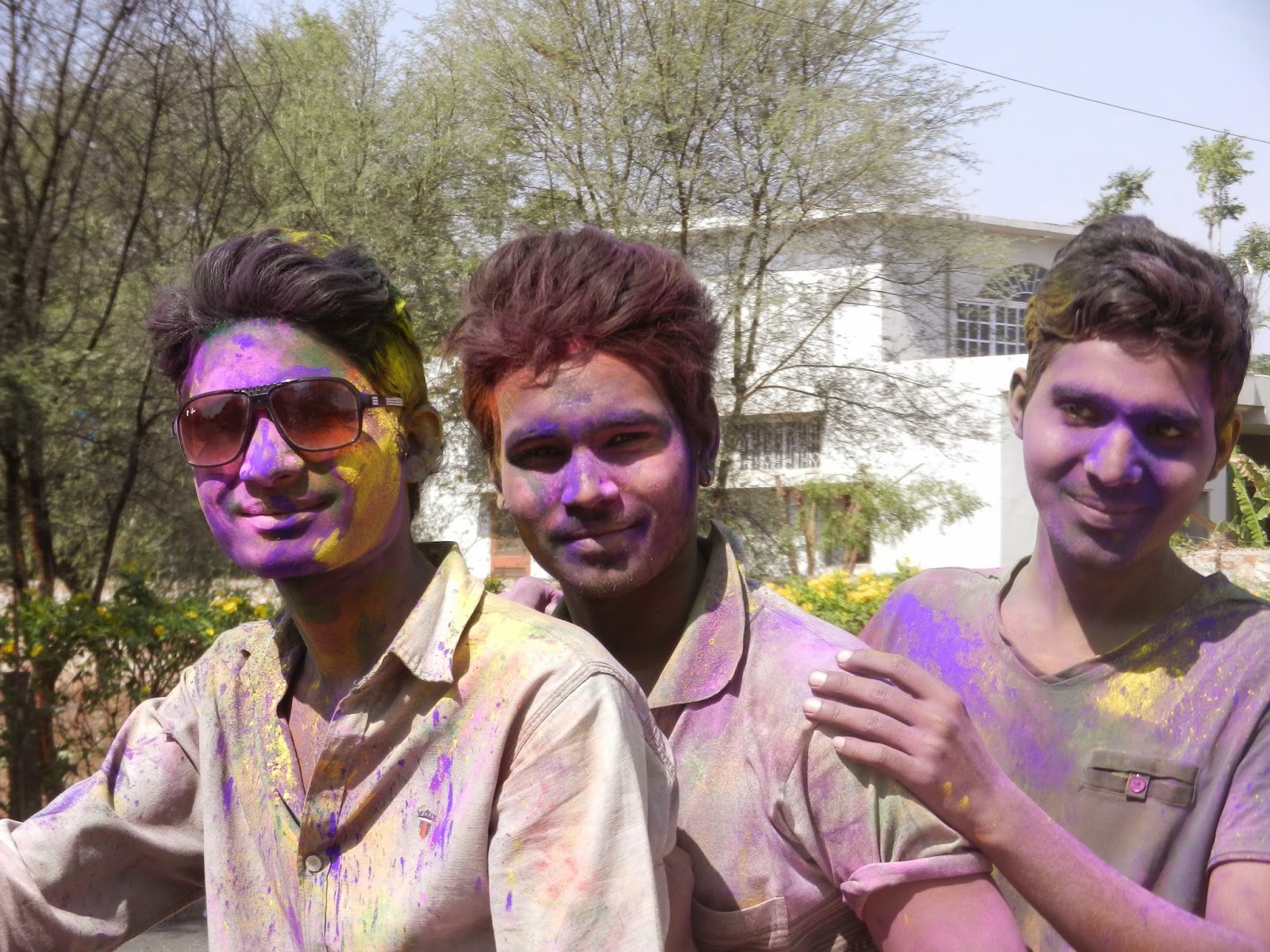
So says our guide Amir. To us, it sounds like we’re getting ready to rumble with our nemesis from the nearby parochial school.  But Holi is much more fun and more colorful than a rainbow.

I’ve been fascinated with Holi since I first saw it as an Amazing Race challenge.  In fact, we built our trip around the opportunity to “play the Holi.” Holi is the Hindu and Sikh equivalent of Carnivale with a bit of Mardi Gras thrown in.  Everyone participates in colorful Holi fun by celebrating and throwing colored powder on each other. Not little bits of color- handfuls and handfuls of bright color! Bonfires dot the roads, painfully close to nearby houses and structures. These serve as gathering spots so friends can plan their frivolity.

It’s a day when many Indians get wild and get a bit tipsy. Imagine scooters packed with riders covered from head to toe in purple, orange and green dye. Some folks don white outfits and coat their skin and hair with oils so they don’t ruin their good clothes and skin with the dyes. Imagine a hearty game of tag on colorful steroids.

We started the day in Jaipur visiting the Amber Fort via elephant ride before Holi got rolling. We then got a final bit of shopping in, enjoyed local Indian fare, cultural dancing, and my personal favorite, elephant decorating. Their skin is soft, dry and coated with countless wrinkles and wiry hairs.  Their eyes seem to look deep into your soul.


I know personally that it took more than a rough loofah to get the green off my back. Most folks are tuckered out, smashed and just plain Technicolor by mid-day that they are ready for a bath and a nap. Happy Holi!!!!

What Day is it? What Day is it?

It may mean Wednesday and “hump” day in the US but in India it means, “camel rides!!!” Today we had the chance to spend the morning with Ram and his two-humped sidekick, Battle. While tigers may be the main attraction at Ranthambore Park, we were captivated by our jaunt into own in our camel drawn carriage.  Ram had friends that seem to sell everything from saris to masala tins and the image of blonde women (and Jeff) seemed to draw a lot of attention from the townfolk. When we “parked” Battle in the town square, we were concerned that someone might steal him.  That seemed to give Ram quite a chuckle and he assured us Battle would be waiting for us. For future reference, camel rides, much like elephant rides, are quite bumpy, higher up than you might imagine and both love their banana treats.

An Indian Fixer-Upper

A wise man (OK, our guide Amir) once said, “There are two groups of people- those that have visited the Taj Mahal, and those that have not.”

Sunrise at the Taj is all it’s cracked up to be.  Something about the white marble is so clean, pure and symmetrical amongst the chaos that surrounds its gates. How can you NOT fall for a memorial to love? Built by emperor Shah Jahan in 1653 as a memorial to his beloved queen Mumtaz Mahal, the site is actually the mausoleum for the lovers and features intricate inlayed stone work, jeweled ceilings and pristine gardens and pools.

How is Jeff going to top this?

The Circle of Life

Millions of pilgrims- and tourists- annually visit Varanasi. It’s much like the Islamic hajj to Mecca, Catholic forays to St. Patrick’s Cathedral or Ole Miss fan trips to Oxford. It’s packed with pilgrims, holy cows, tourists and trash. But what draws the crowds is the Ganges.

Hindus believe the Ganges holds the power of salvation in every drop. It is one of the most sacred places in the world and serves as the spiritual heart of India.  Although its water is fouled by pollution of both the living and the dead, Hindus believe it has the power to cleanse the sins of one’s life and therefore is just the spot to be cremated.

Tiny pedicab drivers negotiate the narrow lanes and packed bazaars, negotiating a sea of scooters, pedestrians and livestock to drop us along the waterfront where we join the throngs boarding small wooden rowboats to experience Varanasi at sunset.

Over 80 ghats, or steps, line the water, each with its own significance and use. Many use the steep stairs each morning for their bathing rituals, to meditate, to practice yoga or to dry laundry along the shore.  But at night, Manikarnika Ghat is our focus.

It’s hard to describe the scene. The funeral pyre at the ghat has burned 24 hours a day for over 1,000 years. Huge piles of wood are ready to add to the blaze and holy cows nuzzle the embers in search of tasty flowers among the ashes.  One after another, wrapped bodies are immersed in the Ganges and added to the flame before a full cremation.  A funeral at Varanasi is a celebratory, albeit expensive send-off for an Indian family. Although illegal, some bodies are weighed down and buried in the river as the funerals are too expensive for many Hindu families.

There are others that are not burned in Varanasi’s fire- pregnant women, small children, holy men, those bitten by a cobra and those who died from small pox. Hindus believe Gods already live in these bodies and shouldn’t be burned.

Boats gather at the end of the evening at Dashashvamedh Ghat for Ganga Arti, a flame-filled prayer ceremony with singing, chanting and dancing with lighted lamps. Both pilgrims and tourists purchase small marigold rings dotted with wax to be lit and floated on their way carrying wishes and prayers for loved ones who have passed on.

Namaste.

Masala: India's Secret Spices

You can tell a lot about a place by its food. On an early foray to New Orleans we enjoyed a cooking class where we learned about the Cajun culture and the Holy Trinity, the delicious mix that is core to most local recipes.

In India, we were introduced to masala.

We were fortunate to spend our first evening in Delhi in the home of Rashmi and Anil, a lovely local couple who opened their home- and their kitchen- to us. We began the evening with a visit to the neighborhood “shopping center”- more of a stretch of vegetable stalls, kiosks, and shops to purchase necessities for our feast. Most interesting were the milk dispensers where local staff bring their milk canisters to the market, pay their rupees, and the spigot dispenses either whole or “toned” milk. We made a quick stop at the local Hindu temple so that Rashmi could make a short visit (Tuesday is apparently an auspicious day for a temple visit AND they give you candy as you leave!)

Once back in the kitchen, Rashmi pulled out her well-worn and well-loved masala tin that is home to the spices that underpin most Indian dishes. A nearby pat of ghee (clarified butter) is always at hand. While we worked, we enjoyed a few rounds of local Kingfisher beer (perfect to wash down spicy samosas.) We made chapatti, we made naan, we made dishes I can’t even pronounce but surely enjoyed. We shared local gifts- our Ghirardelli chocolates and home-made Arkansas pepper jelly and Indian spices and teas.

By the end of the evening, my realization was that we are all more alike than different.  Indian cell phones ring with our same AT&T ringtone as businessmen go about their business.  Women grabbed last minute items at their local shops just like our frequent Publix runs. Proud grandparents share crayon drawings on their refrigerators and wedding photos line walls of their homes. They discuss cricket matches with the same fervor of an NFL play-off game.  And they open their homes to new friends to break bread, or in our case, chapatti and naan.

Tuesday, March 3, 2015

India: Crazy, Chaotic and Charming

India is a fascinating dichotomy. With a literacy rate of 74%, 58% of the population still use open toilets. Indians own the most gold per capita in the world and host elaborate weddings with guest lists into the
thousands but income levels average less than $ 7,000 USD annually. In this country where historic and varied Hindu, Sikh and Muslim temples and mosques rest side-by-side, religious differences underlie long held enmity with its next-door neighbor, Pakistan. Yet, it continues to captivate us.

A heavy fog of pollution is omnipresent in Delhi. This governmental center of the country, Delhi is reminiscent of Washington DC with its wide boulevards and embassy row while Mumbai favors New York City as its financial and business capital. Delhi is made up of two distinct areas- Old Delhi, famous for its Mughal architecture and hectic labyrinths of footpaths, and New Delhi, designed by British urban planner Sir Edwin Lutyens, with its well-appointed rotaries and wide boulevards. We’ve enjoyed amazing architecture while learning about the country’s heritage. At Jama Masjid, India’s largest mosque, we were issued what can only be described as festive hospital gowns to cover us properly for this holy site. We also visited the strikingly simple Gandhi Memorial. Bicycle rickshaws were our mode of transportation as we negotiated the chaos of Chandni Chowk, a congested commerce area selling everything from motorcycle parts to precious metals.

We particularly enjoyed Bangla Sahib Gurdwara, the massive Sikh temple. I’ll admit to a fascination of the stoic Sikhs with their elaborate turbans hiding the long hair required by their religion. After removing our shoes and socks, we were lent bright orange bandanas as head coverings. We washed our feet in the holy pool before entering the ornate gold covered temple. Imagine Trump Tower meets Taj Mahal with bling, bling, bling. Think golden altar, crystal chandeliers and gold-veined mirrors. A hold man with a feather fan continuously fans near the Holy Book to chase away pertinent flies who dare land on the book. Chanting and readings from sunrise to evening draw crowds who enjoy the temple’s meditative pools and on leaving, are issued a small sugar and ghee concoction serving as a Sikh communion of sorts. What a first day in this special place

Wednesday, April 23, 2014

Boston Stronger


Most people never have the opportunity to perform in front of a million people. Not so for those of us who had the privilege of participating in this 118th running of the Boston Marathon.


As race director Dave McGillivray described the race, it was “epic.” With over a million spectators (or as I should call them, roadside participants) cheering on over 36,000 runners, it was easy to see how over 99% of those who started in Hopkinton finished 26.2 miles later on Boston’s Boylston St.


With heightened security, our team gathered early in Hopkinton to join the long lines for porta-potties. Ingenious planning was required to carry my race-day necessities. My four dollar thrift shop fleece not only kept me toasty but was home to a myriad of electronics, fruit, nutritional supplements, chap sticks, trash bags, and my “heroes” cape with the names of those supporting my fundraising efforts.


My only point of reference to describe the spectacle is Mardi Gras in New Orleans- but without the beads and floats, but with the beer and screaming throngs. Crowds lined a dozen deep in many areas. From weathered Bostonians in equally weathered Red Sox sweatshirts to a children’s gymnastics class handing out high fives while popping up and down on mini-trampolines, you could feel the collective energy pushing you along.  At Wellesley, the annual chorus line of coeds with their “Kiss me because I’m (insert your own descriptor here)” drew a good number of male runners to the sidelines to collect their kisses. I admit to giving in to more than one “Free Hugs Here” sign from buff guys. I’d heard about the daffodils planted along the entire course but was only allowed peekaboo glimpses through the legs of spectators.


I admit to getting particularly emotional while passing (or often, being passed) by a number of wounded and handicapped runners. Spectators were particularly loud for local favorites, Team Hoyt, honoring father Dick who has pushed handicapped son Rick in his wheelchair to compete in triathlons and marathons for more than three decades. This is Dick’s last marathon.


As a non-qualifying charity runner for the American Red Cross, I expected a long day but wasn’t fully prepared for Boston’s abundant hills (I believe I actually heard them scoff at the meager bridge I used for training.) I used the uphill walks to capture crowd shots and even send a post or two.  As a once-in-a-lifetime opportunity, I didn’t want to forget a moment!

I had a number of valuable “learnings” from this “epic” event:
·         When bad people do bad things, good people will overcome with wicked vengeance. Hats off to the people of Boston who took back their finish line!
·         If a wonderful opportunity presents itself- take it!  A casual conversation at a party last May led to the chance to be at this starting line (Thanks, Karen). That night, I decided to go for it and never look back.
·         If you accept an opportunity, be prepared to do what it takes. After pushing the button to send my application, I went out for a run. Good intentions may get you to the starting line but hard work and commitment are necessary to make it to the finish.
·         Finally, you can’t do it alone.  It does take a village- from those dear friends who generously supported my fundraising and sent countless day-of-race wishes, to fellow runners who helped make training and racing miles melt by. And most of all, my super-supportive husband Jeff who now knows more than he ever wished to about chafing products and blister relief but still rose early on Patriots’ Day to make me “lucky” pancakes and hunted me down hours later on the course at mile 25.  I may be the one with the medal and the cool commemorative jacket but these are the folks that made this opportunity possible.

Sunday, February 24, 2013

Sweet As...

In New Zealand, if you like something a lot or think it's really cool, you'd call it, "sweet as."  Not "sweet as something", just"sweet as." 

Our tramping trip to Milford Sound ended with - a cruise through the massive Fiordland National Park and it was "Sweet As." The crystal clear water in the park is so deep that cruise ships can’t reach the bottom to anchor. I lost count of the massive waterfalls tumbling into the sea. Our captain tucked the boat alongside one- delighting and drenching those on the top deck! Fur seals struck a pose on rocky outcroppings along the snow-capped mountains as kayak paddlers broke through the mirror-flat waters. Unfortunately, photos just don’t do the fiords justice so you’ll just have to plan your own trip to see them.

Back in Queenstown, we grabbed one last walk along the water, said goodbye to our mountain views and toasted our accomplishment in a pub with a group of fellow walkers.

From this trip I took away the great respect and stewardship the Kiwis have for their land. I didn’t see one piece of trash on the entire trip. An active and low impact lifestyle is the norm for most and they are more than pleased to share their lovely country. So grab your backpack and jumper, put on your sunnies and head on down for a flat white- Sweet As!

Friday, February 22, 2013

I'd Rather be in a Staff Meeting...

On the third day of our Milford Track hiking adventure, as we continued our ascent to the Mackinnon Pass, I heard something come out of my husband’s mouth that I never thought I’d hear. As we slowly slogged up the trail he muttered, “In six years of retirement, I never thought I’d say this but I’d rather be in a staff meeting!”

I can only hope his momentary lapse was due to the arduous climb through the fog to the highest point of our hike, named for the fearless Quintin Mackinnon who pioneered the track in 1888. I hoped that the descent, albeit a rocky one, would raise his sagging spirit and ease his tired legs.

The Milford Track, often called "the finest walk in the world", is the capstone to our three-week adventure. Most recently, we’ve made our way down New Zealand’s mountainous South Island, enjoying breathtaking vistas, snow-capped mountains and the easy-going vibe that is synonymous with the Kiwi lifestyle.

After departing from Franz Josef glaciers we dropped off our car in Queenstown. Jeff was glad to hand over the car keys after days of mountain switchbacks and more than a few white-knuckle moments on the road.

Queenstown was originally settled in the 1860s during one of New Zealand’s gold rush periods.  It now serves as their center for extreme sports. A walk down the main drag affords opportunities to partake of bungee jumping, sky diving, paragliding and rafting. In the winter, it serves as a hub for skiers.  Ringed by the Remarkable mountain range and sitting on glacial Lake Wakatipu, the town of 12,000 swells to over 30,000 at peak periods. Proud locals will share that the lake is 99.999% pure so you can go ahead and fill your water bottle right from the lake! Jeff was itchy to put a line in the water to snag one of the huge trout calling the town pier their home.  A 15-minute transfer left us at the Shotover River where we boarded a speedboat for a rock-hugging, high-speed ride own the winding river. We pulled 360s within inches of the rocky canyon walls.

At our Saturday briefing, we met our fellow hikers, were issued our gear and received final instructions for the upcoming hike. This is my first hiking trip carrying more than a day pack- we carry all our clothes, drink, lunch and other needs on our back. We spent the evening paring down and dividing up essential items (OK, we spent the evening tasting New Zealand wine, but we talked about packing while we drank).

The drive to the trailhead was spectacular- passing sheep and cattle stations and meandering streams. After a quick ferry ride and hike, we arrived at Glade House, our first lodge for the trip. Remember, all the materials used to build these 50-person lodges had to be carried in by boat, helicopter or on foot. Several succumbed to fire or avalanche and required rebuilding.  The effort makes the structures with their picture-perfect views even more impressive. We settled in to enjoy a hearty supper with our fellow trekkers- mainly from Australia, Japan and the US.

Each morning we were awakened by Genny. Genny is not a saucy New Zealand gal. Since power goes off each evening at 10pm when the “Genny-rator” is turned off, for an eye-opening wake up call we were instructed to leave our lights on and enjoy a bright wake up when the “Genny-rator” came on each morning.

The first day hiking is always a bit shaky. You find yourself questioning how much food and water to bring, what pace to keep and how much clothing to wear. Nights include reassessing your pack and tending to sore muscles and blisters (OK, again they also include wine and stupendous views). Day Two was when Jeff informed me (as he did in Kili) that I should include my next husband on any future hikes. His painful gate resembled that of Kramer in the Seinfeld episode where he wore the really tight jeans and walked like Frankenstein.

To get a sense of the often rocky inclines, one 9-mile day took eight hours to complete. This was followed by a 13.5 mile day- all carrying a 20lb. pack. It has truly given me a new appreciation for the joint pain and increased effort required to carry even small amounts of additional weight. Can you spell Weight Watchers?

Our final day was spent hiking on rain forest trails lined with giant ferns and waterfalls. The trek was arduous but rewarding when we gathered with our fellow hikers for the ferry to our final lodge.

You may wonder (as Jeff often pointed out) why a person would put themselves through such effort- especially on vacation! The challenge and ultimate achievement of the goal is compelling. Sharing the experience with new-found friends is equally memorable. The encounters with exquisite scenery and wildlife are something you can’t see from a tour bus.  And in the end, it’s better than ANY staff meeting!

Thursday, February 14, 2013

Ice, Ice Baby

The weather fairies were with us again for our morning helicopter ride to Franz Josef glacier.  Due to fog and visibility, it was touch-and-go if we would fly but we were the only group to make it up to the glacier for the day. Once the copter landed we strapped on crampons to grip the ice. The glacial terrain is constantly on the move so the crew carries axes to cut stairs to create paths to various ice caves. It makes for a once-in-a-lifetime adventure.

Skipper vs. Barbie: the Battle of the North Island

When I was a little girl I had a Skipper doll. Skipper was Barbie’s younger scrappier cousin.  She wasn’t nearly as glamorous as Barbie but she what you’d call “spunky” and was the kind of doll that could probably throw a good softball pitch.  I SO wanted to love Skipper but Barbie was the one with the cool beach house and metrosexual boyfriend. How could you resist her charms?

That was how I feel about Wellington. It is the Skipper of New Zealand’s north island, living in the shadow of glamorous and well-heeled Auckland. Both have beautiful waterfronts dotted with sailboats and breezy restaurants. While Wellington lacks the population and size of Auckland, as the country’s capital it has a substantial government center. Its local universities give it a youthful quality with areas full of ethnic restaurants and pubs for watching “footie” games. While Auckland’s movers and shakers enjoy cocktails at trendy locavore restaurants, Wellington’s after-work crowd gathers on lawns at local rowing clubs along the quay. Our favorite time in Wellington was spent walking the miles of nature paths in the city’s Botanical Gardens. Their outdoor cafĂ© in the rose garden was a perfect spot for brunch and a glass of crisp wine.

To get to the south island, the most practical way is via ferry. The boat is huge- full of people on foot, in cars and in caravans (the Kiwi equivalent of RVs) as well as large trucks hauling goods between islands. The four-hour journey was pleasant- they even have a kids’ play area, a casino and show two movies on the crossing. It took a good hour to load us all onto the vessel and they strongly reminded travelers to note where their vehicles were parked- much like a Jersey shopping mall parking structure. I can only imagine the honking if we were to lose our car among the many decks and bring disembarkment at a standstill.

Our first stop on the south island was a special one.  We’ve settled in to a lovely cottage tucked into the countryside in the south island Marlborough wine country. Run by a lovely couple, we’re staying in a sheep-shearers cottage on a small property complete with sheep, deer and chickens (who are kind enough to supply eggs for our morning breakfast). We can barely bring ourselves to leave the idyllic property (but I did get a special run and bike ride through the vineyards!) The owner, Paul, has taught me how to make a flat white coffee-a complex procedure that includes warming cups to the optimum temperature before filling.  He would cringe if he knew I had CoffeeMate in my suitcase. Paul has a ’55 red Morris convertible- a cross between a Mini and Alfa Romeo. We were so taken with the little sportster that he gave it a washing and chauffeured us to a special dinner at the Hertzog vineyard. What a memorable evening!

After a side trip to the famous west coast Pancake Rocks with their powerful blowholes, we’re now settled in to Franz Josef, getting ready for tomorrow morning’s helicopter ride to our glacier walk. 

Thursday, February 7, 2013

Our Date with Mt. Doom

OK, not really Mt. Doom. Ngaurahoe is the mountain featured as Mt. Doom in Lord of the Rings. We are heading off to hike its next door neighbor, Mt. Tongariro. New Zealand takes its LOTR stories so seriously- we think there should be a drinking game involving Jagermeister every time someone says “hobbit.”
The Tongariro Alpine Crossing is arguably one of the finest day hikes in the world. We are using it as a dry run for our 4-day Milford Track hike at the end of our trip. Due to high winds, blistering cold and volcanic ash, the trail has been partially closed the last few days.  Luckily (or not so luckily) the trail is open for our day of hiking. 
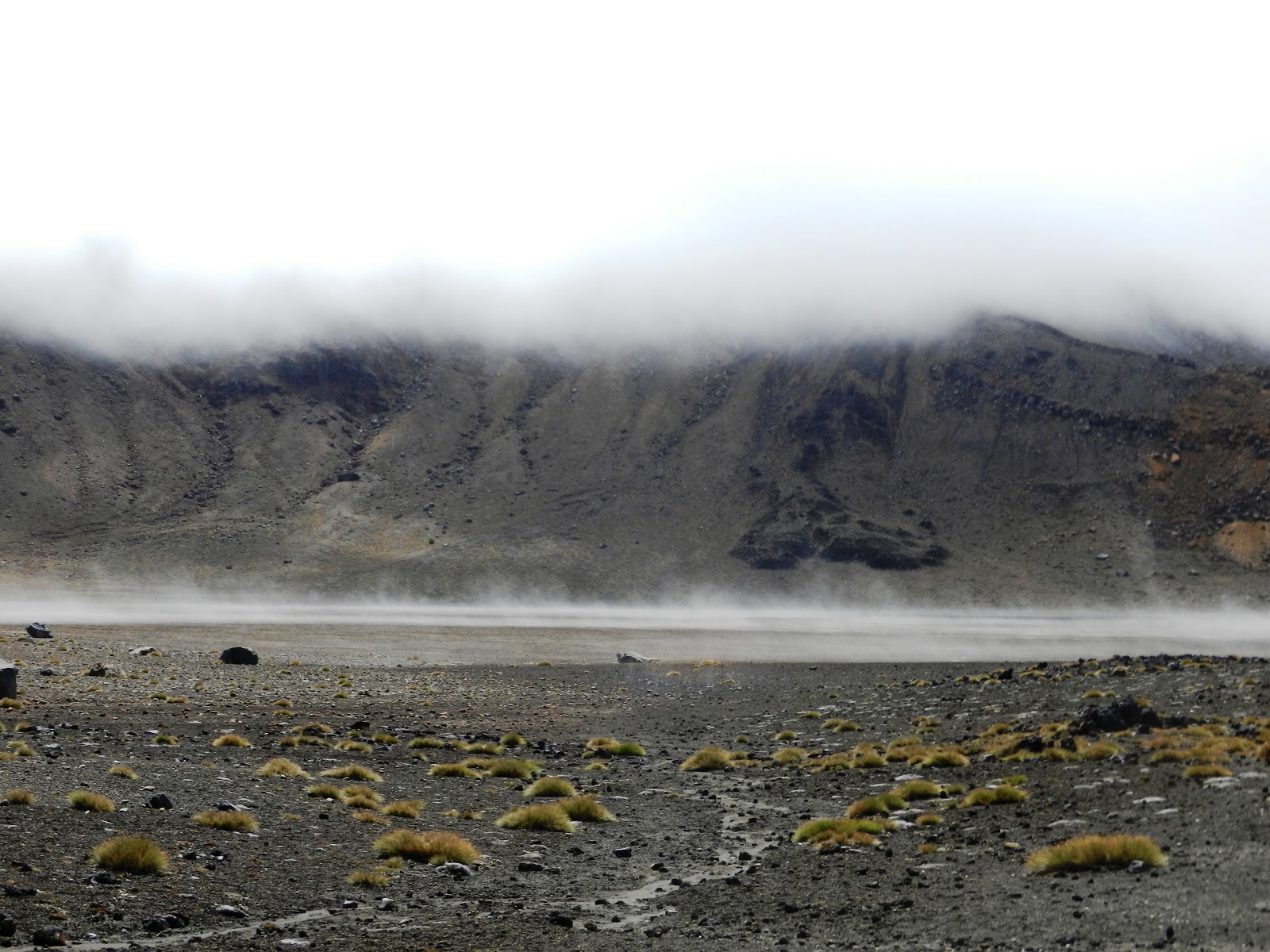
We literally have on every item of hiking gear and clothing we brought.  Loaner gloves allowed Jeff to leave his hand-socks at home. Wind gusts of 35mph cut through our clothes but luckily the sun peered out to warm things up a bit.  With the trail closing, we did an out-and-back hike for 6+ hours instead of the full 8-9 hour adventure. The topography was striking.  Much of it appeared like a rocky Mars- dotted with small drought-tolerant succulents and rocky terrain. Later, streams and lichen made for a more verdant landscape. One crater area was covered with rolling clouds at our feet as we walked across the flatlands.
Probably one of the best views was actually from the huge windows at the Schnapps Bar at the foot of the mountain. Well, at least it was warmer! And they had Jagermeister… just in case!

Kia Ora, My Little Kiwi!

Kia ora, Welcome to New Zealand. After a long journey we are safe and sound in middle earth as Hobbit aficionados know New Zealand. The country is full of national parks, volcanos, wineries and sheep (due to sheep “emissions” the country can’t meet its limits of the Kyoto Accord). One thing it’s not full of is people.  Only 4.2 million live in the entire country- three quarters live in the North Island. OF these, I believe two thirds are cute guys with even cuter accents!


About 12 percent of the population is Maori, the local indigenous people. According to Maori legend, the demigod Maui sailed from Hawaii in his canoe and caught a huge fish. The fish is supposedly the north island while his canoe is the south island. This week the country celebrated Waitangi Day, marking the date in 1840 when the treaty was signed between the British and the Maori. I must admit I’m having trouble with the Maori words- particularly the names of small towns. Most start with “W” or “T” and are tongue-twisters like Whakatane, Waitara and Waipukurau. To further complicate things, the “wh” is pronounced like “f”, “r’s” are rolled like “d’s” and “a’s” are like “ah.” You should hear me calling out directions from the map.

We settled in quickly into Auckland, the nation’s largest city. The “City of Sails” wraps nicely along the water and boasts of 70,000 boats in its harbor. The quay is dotted with trendy bars and outdoor cafes. Auckland is a livable city with their own version of Central Park (the Domain) and Ponsonby, a leafy neighborhood of wooden Victorian homes and cafes. Jeff was elated to find the Superbowl available at a nearby 115 year-old tavern. I guess Beyonce goes beyond all borders.

We’ve become addicted to flat whites- the ubiquitous creamy latte-like coffees offered in every cafĂ©. I do love my froth but these are beyond description. I’m also feeding my sweet tooth with hokey-pokey, a yummy butter brittle ice cream, and pavlova, the feather-light national dessert much like a gooey merengue. Thankfully, our itinerary is jam packed with activities to work off these treats.

After Auckland we ventured to Waitomo for blackwater rafting in the area’s famous glow worm caves.  This is one of those activities that you can do in other countries but would never be allowed in the litigious US. After suiting up in heavy wet suits and selecting a size-appropriate inner tube (if you sit in it and it sticks to your bum, that’s the one!) we hiked down to Ruakuri Cave. After slithering under low hanging stalactites (remember, stalagmites have a “g” and come from the ground while stalactites have a “c” like ceiling!) we cascaded down freezing underwater waterfalls. Once we dimmed our headlights, we were amazed by the light show of millions of glow worms dotting the ceiling. What a sight! Unfortunately they don’t allow cameras as they want you focused on not drowning or causing bodily injury, so I’ve had to attach a photo from the tour company. 

Next up… hiking the Tongariro Crossing, supposedly one of the finest one-day hikes in the world!  I had better juice up on flat whites!

Wednesday, September 12, 2012

The Hills Are Alive


We’re just wrapping up the biking portion of our trip and I can’t recommend it enough. Our six days of riding kicked off in the Czech Republic, meandered through Germany along the Danube and wrapped up in the Austrian countryside. Since the terrain for the most part is fairly flat, rides have been pleasant. Most have been within constant view of a river and castle of some kind.  People who are attracted to a trip like this are easygoing, active and low maintenance- all good things in travel partners.

A few things have been constant throughout our adventure:

·     Bavaria is clean. We saw a total of two pieces of trash along our 100 miles of riding.  I’m not sure if they just choose to be green and not litter or are meticulous in cleaning. I’d bet on the former based on the solar panels we saw on most homes and farms.

·         They sure do know how to grow some flowers.  Window boxes in the quaint villages we visited were overflowing with colorful vines and flowers. We’ve stayed in a series of family-run inns- each one more charming than the next!

·         They sure like castles and cathedrals. No matter how small the town, they’ll surely have a town square or two dominating the village. The small village of Passau, Germany has the second largest organ in the world.  In the Czech village of Cesky Krumlov, the grand Rosemberg chateau was a huge presence guarding over the city. The Benedictine Abbey in lovely Melk, Austria held more gold than Fort Knox! 

·         They can brew some beer! From Czech to Austria, most meals included a local brew or two- often in a tiny Bavarian tavern.They also make a mean wine here in Austria with vineyards lining our bike paths.  

 After tonight’s goodbye dinner, we’ll bid adieu to our fellow cyclers and head off for Vienna (in search of the boys choir & sausages. Get it?) I’m hoping this will be the first of many bike trips in our future.

Monday, September 10, 2012

Terezin: Never Again

Sometimes when you travel it is important that you do things you don’t necessarily want to do.  Terezin is one of those things.  You see, Terezin is a concentration camp.
Terezin Crematorium

Originally built in the 1700's as a fortress to keep out the Prussians, the compound was later repurposed by the Nazis to keep the Jews in.Terezin is both a town and a camp. The Nazis moved out the original 7,000 town residents and replaced them with 60,000 Jews into what they termed a “resettlement area.” To keep the settlers content, when they took neighbors away to the fortress to be transported to extermination camps, the overseers told them they were going off to visit other family members and shared “stories” of other friends that were waiting for them. This town was an important tool for the Nazis in early days, serving as their model Jewish town and was used for propaganda purposes.  They even produced a video, The Fuhrer Gives a City to the Jews, laden with happy settlers enjoying soccer, sewing and concerts. 

How the viewers could miss the haunting stares of the residents is beyond me. Similarly, the nearby camp was prepared for an imminent Red Cross inspection with a carefully planned tour, new paint, and improved bathroom facilities (the sinks, installed just for show, didn’t even have working plumbing.) Camp residents were forced to build railroad tracks ostensibly for supplies, but really used to move prisoners on to Auschwitz without attracting the attention of the townsfolk. Sadly, the site passed the brief Red Cross inspection.

Although over 300 Jews were hanged or shot at the camp, the dire conditions in both the overcrowded town and camp were the real enemy. Disease was rampant, sanitation lacking, and medical care unavailable. Of the 155,000 that passed through the facilities, over 35,000 succumbed from the conditions. Fewer than 100 of the 15,000 children in the camp survived. Others were shipped east to the extermination camps for the Fuhrer’s final solution.

For me, a particularly difficult sight to see was the crematorium and cemetery. In the earliest days, at one end of the cemetery, the dead were buried side-by-side with small gravestones. As time progressed, each site held 20 or more remains with a small stone marker. Finally, one end of the field remains bare as they gave up marking remains buried en masse in huge pits. The crematorium still holds the scent of the oil used to run the ovens. Sadly they had turned the process into quite a production line and ran around the clock to meet the burgeoning needs of the camp.

Throughout our visit I couldn’t help but think of the quote by Martin Niemoeller featured at the Holocaust Museum in Washington:
First they came for the Communists but I was not a Communist so I did not speak out. Then they came for the Socialists and the Trade Unionists but I was not one of them, so I did not speak out. Then they came for the Jews but I was not Jewish so I did not speak out. And when they came for me, there was no one left to speak out for me.”

Grand- And She Knows It!


I was actually a bit afraid to meet Prague.  Everyone raved about it. “It’s one of my favorite cities,” I’d frequently been told. It was as if it was my duty to fall for this historic Czech capital. What could be so special about this place that made so many folks wax poetic?  What if it didn’t measure up?

Honestly, for the first day, I didn’t know what to think about Prague.  I needed time to let it sink into me.  So many things about it reminded me of Paris- the numerous bridges that cross the river linking the city neighborhoods, its quaint restaurants with colorful window boxes, and its many urban parks serving as quiet oases in the midst of everyday life.  In other ways, it reminded me of Barcelona with its odd mixture of architecture.  Its looming castle and many cathedrals made me think of Romania.  Its youthful vigor brought to mind our recent trip to Croatia.

Finally, after a second evening walking home along the riverfront it washed over me that Prague was just Prague.  It isn’t Paris or Barcelona and frankly, it doesn’t try to be.  It reminds me of a society matron putting on her best finery and jewels to get ready for a ball. There may be a few cracks in her makeup, her corset may be a bit too tight, but she will demand and receive attention from the moment she enters the room. Prague is a proud city with a rich and powerful heritage that for the grace of God was never flattened by the war and upheaval that surrounded it.  Its grandeur is resplendent from the huge castle looking down on the city from a nearby hill (the largest in the Czech Republic) to the Charles Bridge serving as a hub for its many admiring visitors. Her residents take time to enjoy the finer things life offers- a lingering coffee and croissant, an evening organ concert or just strolling the cobblestone streets. Every meal we enjoyed was al fresco- most along the riverside.  A classical guitar concert provided a wonderful evening interlude- especially after a mug of local beer. A favorite moment was a lovely lunch up at Belle Vista, a tiny hillside cafĂ© overlooking the castle, vineyards and the city down below- again, with a local beer in hand.  Now I “get” Prague.

Sunday, September 9, 2012

Gem of the Adriatic

Imagine all that you love about Italy- the food, the olive oil, the wine, the countryside.  Now throw in azure waters and a younger hip vibe. That’s the Croatian coastline. 

The country boasts of 1000 islands and we are headed off on our chartered yacht, the Vito, to make our mark on just a few of these atolls.  Our gang gathered on the dock in Split for transfer to the Vito in Trogir.  After meeting the crew and enjoying a glass of champagne, we checked out our staterooms, pumped up the ipod, then headed into the small but sophisticated town for a meal of fresh seafood.

It’s a tough schedule aboard ship. It’s not for the faint of heart.  After a hearty breakfast, many decisions must be made- where will we anchor for swimming, what time will lunch start, and the big question for the day- white or red wine.  Croatian wines are excellent.  They are selfish and keep them for themselves so you won’t see it on your grocery shelves.  After lunch and several bottles of cold, fresh white wine, followed by an afternoon swim, the grind begins again as we head into port in the skiff for the evening’s feast.

Each town has its own flavor, whether natural beauty of Brac, Vis, and the Mjlet National Park or the hopping seaside bar scene in Hvar or Korcula, each night was special. Our personal favorite was Korcula due to its rich history, fortified city, and bevy of sea-side restaurants.

But the trip was capped off with the gem of the Adriatic- Dubrovnik.  Until the conflict with Serbia, this beautiful city had remained untouched through centuries of Roman, Ottoman and Venetian conquerors. You can see its battle scars- pock marks from bullets and newly-tiled roofs replacing those ruined by mortar, but these small imperfections don’t mar the beauty of this charming city- only serving to make her appear a bit more “worldly.” 

This walled city is best explored at the edges of the day- early morning walks on the city walls before the cruise ships descend on the town and late afternoon at Bar Buza.  You’ll have to hunt for a small opening in the city walls to find this tiny bar.  Tucked neatly into the cliffs overhanging the sea, most evenings started here as we watched kayaks and fishing boats make their way home for the evening and ended with a promenade down the Stradum with a gelato.  A special dinner on the cliffs above the city was a great way to end the day and a highly recommended spot is D’Vino wine bar (a girl needs to learn about the local brew, doesn’t she?)

While chartering a boat and crew is a special treat, Croatia has a great ferry system that will get quickly get you from island to island and you can round up a cozy apartment for a short stay before heading off to your next island adventure.  Now, you don’t have much of an excuse not to visit, do you? 

Sunday, July 15, 2012

Now This is Retirement, Diocletian!


With over 3,600 miles of seafront and more than 1,000 islands, Croatia feels more like the Riviera than Eastern Europe.  Much of its ambiance comes from its history- I’ve lost count of how many countries and empires ruled- or attempted to rule- this small gem of a country. It’s northern Istria peninsula, tucked in just east of Venice and Slovenia, feels more like Italy.  As you head south along the Dalmatian coast, the influence of Germany and others is felt in architecture and cuisine. But wherever you go, Croatians are a friendly sort, eager to share their rich history while enjoying life along the Adriatic sea.


Our initial stop before boarding our yacht was Split with its impressive Roman ruins. The centerpiece of the old town is the palace of the Roman emperor Diocletian (245 – 313).  His retirement home of sorts, the palace was both a fortified city and a luxurious villa. No grid system is at work in here- it is an amazing labyrinth of alleys and lanes now featuring boutiques and galleries side-by-side with Roman ruins.  The palace was eventually abandoned so the locals, fleeing Slavic invaders, moved in and the town sprouted up among the ruins.  When the Venetians took power in the 15th century, they added new fortification and architectural flourish. 


Like much of Europe, the favorite local pastime is strolling the seaside pedestrian boulevard, the Riva (the Croatian equivalent of Barcelona’s Ramblas!) We stayed in a local Sobe, a small equivalent of our own B&Bs.)  We could literally open a window and reach out and touch the ruins of Jupiter’s Temple. A Croatian choral group practiced nightly for an upcoming festival- their voices bouncing among the ruins.

Next stop, meeting the Vito and its crew for our sailing adventure.

Sunday, September 4, 2011

Au Revoir, Mont Blanc

After six tough days of hiking, I’ve folded up my hiking poles, packed away a pile of stinking Under Armour clothing and headed to Geneva to celebrate the completion of our Mont Blanc adventure.

Hiking here in Europe was an entirely different experience than hiking to Machu Picchu in Peru.  There, we worried with high altitude and drinking the water but were rewarded with a lost Incan city. Here, we encountered lots of daily mileage and rocky terrain but were rewarded with alpine villages and fine wine as we winded up each day.

The Europeans have an interesting take on hiking. They think nothing of cranking out a dozen miles on the trails on a random sunny Saturday. They will stay in spartan accommodations with shared bathrooms and lumpy mattresses but insist on chocolate croissants and cappuccino at the trailside refuges encountered high on hiking trails. 

During our adventure, we traveled counter-clockwise around majestic Mont Blanc, beginning and ending the journey is picturesque Chamonix, France. Each day was packed with miles of rocky terrain and challenging inclines and descents, but we were greeted to spectacular vistas laden with glaciers, alpine lakes and grassy knolls for mid-day picnics. We visited tiny hamlets bursting with flower boxes and alpine inns. We traveled through France, into the Italian countryside and through Switzerland.  We visited local cheese makers and enjoyed their wares for lunch each day.  We learned of local history, celebrations and customs from our knowledgeable guides.  Local cuisines and wines surely packed on a few kilos. It was challenging each day, but we were more than rewarded for our efforts.  Au revoir, Mont Blanc!

Queen of Queens: Mad Cow at its Best!

I wouldn’t have believed it without a Google search, but welcome to the land of Swiss Fighting Cows!

As we trek across the European countryside, we’ve encountered all shapes and sizes of goats, sheep, marmot (I thought it was just a clothing company!) and cow.  Friends had prepared me for the enchanting symphony of cowbells I’d encounter on our trip.  Imagine hearing a cacophony of ringing bells lilting across the countryside as we go about our journey.

For generations, farmers have placed large (and often heavy and ornate) cowbells around the neck of their milk cows to allow them to quickly find their grazing livestock and bring them in for twice-a-day milking.  The bells sound loudly across the countryside for miles as the animals enjoy grazing in the hilltops.  All that’s missing is Julie Andrews singing “The Hills Are Alive…”

Apparently, the cows like getting milked and line up quickly at the portable milking station and storage tank taken out to the grazing area for the daily ministrations. The cows enjoy the tasty grass until winter approaches and the annual parades and ceremonies are held to welcome them home to lower climes and hay for the winter. I guess this is where the saying about the cows coming home started.

Our guide alerted us that we may see some of the famous Swiss Fighting Cows.  Our group of skeptical and jaded Americans accused her of trying to pull one over on the gullible tourists so we shared our own tales of cow tipping and snipe hunting.  That was, until we got back to civilization and the internet to confirm this exciting competion!

Cow fighting is a traditional Swiss event drawing up to 50,000 spectators a year.  Each year, the canton of Valais and the town of Marigny host a series of cow fights known as combats de reines (“queen fights”). Local district winners vie for the coveted title of La Reine des Reines (“the queen of queens”)  There is no swimsuit competition or scholarship awarded but the value of the winners greatly increases.

These female Herens breed of cows typically get into scuffles in the fields as they assert their dominance of the herd.  Each of these head-to-head butting clashes can go on as long as 40 minutes and end when one contestant either refuses to engage or is pushed from the ring. No worries- horns are buffed down to minimize possible bovine injury.

Spaniards, keep your bullfighting.  Bring on the Swiss fighting cows!

Hard Core vs. Soft Core

I’ve always thought the most difficult people were those who think they are low maintenance but are really high maintenance (of course, I consider myself low maintenance so who am I to judge?) Similarly, as I begin my Mont Blanc hiking excursion, I’m feeling like a bit of a hard core adventurer as I start this 60+ mile trek across the French, Italian and Swiss Alps, rounding Europe’s most famous and celebrated peak. That was, until I reached Chamonix, the quaint French mountain village hosting the Ultra-Train de Mont Blanc.

Frankly, I’d never heard of the UTMB.  These men and women are nuts and are definitely hard core! This annual mountain ultramarathon covering approximately 166km of wicked mountain terrainand elevation gain, takes place annually, beginning and ending in Chamonix.  Some believe it is the most difficult footrace in Europe. These 5000+ athletes don’t have a guide, a bed or a support driver. They run armed with hiking poles, compression socks and headlamps to assist as they trek throughout the night.  Rain, cold and rugged terrain are to be expected.  While the speediest will cross the finish line in slightly more than 20 hours, most take up to 45 hours to complete the course and this year 1100 were forced to drop out along the way.  My most memorable moment was watching four runners hoisting a makeshift sled carrying a disabled little red-headed girl over the finish line.  While no prize money is awarded to the winners, this team and their accomplishment was priceless.

Our group of six took the decidedly more soft core approach.  We head out on Monday with our lead guide, Flo, a 40-something lithe bundle of muscle, and our driver/ assistant guide, Laurent, a lean Frenchman with unbridled energy and enthusiasm.  Our group, all experienced hikers, are ready with our Camelback bladders in backpacks, rain gear on ready alert, Voltaren on our achy knees and stories to keep each other entertained as we conquer the trails of Mont Blanc.

Wish us soft core luck!